

Lower back pain is one of the most common reasons adults seek medical care and miss work, and it remains the single leading cause of disability worldwide. According to the 2021 Global Burden of Disease study, low back pain affected roughly 619 million people globally in 2020, with researchers projecting that figure will climb to more than 843 million cases by 2050 as populations grow and age. Lifetime incidence estimates range from 58% to 84%, meaning most adults will experience it at some point.
For decades, clinical management of back pain was dominated by the traditional biomedical model — a narrow focus on structural wear-and-tear and anatomical damage visible on scans. Over the past several years, leading bodies including the American Physical Therapy Association (APTA) and international clinical guidelines have shifted toward a biopsychosocial model: research shows that fixating on imaging findings alone does little to resolve chronic pain, and can actually worsen a patient’s experience by reinforcing fear-avoidance behavior and pain catastrophizing. Active physiotherapy and mobilization are now established as first-line, non-invasive treatment for the large majority of back pain cases. This article serves as a comprehensive, evidence-based guide to physiotherapy and exercise for a healthier lower back.
1. Understanding Lower Back Pain: Why Do We Hurt?
Lower back pain can have various causes, but it is often linked to non-serious issues like strained muscles or ligaments, or problems with the spine’s discs and joints. Sometimes, the pain can stem from weakness in the body’s core muscles. These muscles (including the abdomen, pelvis, lower back, and diaphragm) act as a natural protective belt, shielding the spine from daily stresses. When these muscles are weak, more strain and pressure are placed on the spine and discs, which can lead to pain and injury over time.
A thorough clinical assessment by a physiotherapist also serves a safety function: it screens for “red flag” warning signs — such as saddle numbness, loss of bladder or bowel control, or progressive weakness in the legs — that require urgent medical referral rather than routine physiotherapy.
Common Misconceptions about Back Pain
- Misconception: “Pain means serious damage, and I must rest completely.”
- Reality: In many cases, pain signifies nerve sensitivity or inflammation, not necessarily tissue damage. Prolonged, complete rest can worsen the condition by causing muscle weakness and joint stiffness. Gentle, controlled activities, such as short walks, can help reduce pain and accelerate recovery.
2. Not All Back Pain Is the Same: Matching Treatment to the Cause
Effective physiotherapy starts with correctly identifying which type of back pain a person has, since the treatment approach differs considerably between categories.
- Non-Specific Axial Low Back Pain: Accounts for roughly 85% of chronic low back pain cases, where symptoms cannot be tied to a single structural cause. Treatment focuses on correcting faulty movement patterns, improving soft-tissue flexibility, and strengthening the spine’s stabilizing muscles.
- Lumbar Radiculopathy and Sciatica: Caused by irritation or compression of a nerve root as it exits the lumbar spine. Physiotherapists commonly use the Straight-Leg Raise (SLR) test to assess nerve root involvement, alongside directional-preference exercises based on the McKenzie Method (Mechanical Diagnosis and Therapy), nerve gliding techniques, and gentle lumbar and piriformis stretches.
- Post-Surgical Rehabilitation: Patients recovering from procedures such as discectomy, laminectomy, or spinal fusion need carefully guided rehabilitation to prevent fibrotic scar tissue and muscle atrophy. Early, supervised mobilization typically begins immediately after surgery, alongside spinal precautions — for example, avoiding bending, twisting, and lifting anything heavier than roughly 4.5 kg (10 lbs) for the first six weeks, and using a “log-rolling” technique to get in and out of bed.
- Back Pain Linked to Hip Joint Aging: A randomized controlled trial (the MASH trial), published in The Lancet Rheumatology, found that in adults over 60 with chronic low back pain accompanied by hip pain, a hip-focused physiotherapy approach produced significantly better improvements in functional mobility and disability than treatment focused on the spine alone.
3. Physiotherapy: Beyond Massage and Machines
Physiotherapy is a specialized and holistic approach to treating musculoskeletal problems, focusing on the recovery, maintenance, and maximization of an individual’s physical movement and function. A physiotherapist doesn’t just work with physical tools; as a movement specialist, they identify the root cause of your problem and offer a long-term solution.
The Role of a Physiotherapist: Assessment and Treatment Plan
A physiotherapy session begins with a comprehensive assessment. The physiotherapist reviews your medical history, asks about the type and intensity of your pain, and conducts a full physical examination. This assessment includes checking your range of motion, muscle strength, posture, and movement patterns.
Based on this evaluation, the physiotherapist designs a fully personalized treatment plan, which may include:
- Manual Therapies:
- Mobilization: Gentle, rhythmic, and stretching movements on joints and the spine to reduce stiffness and improve range of motion.
- Manipulation: Controlled and swift movements that may be accompanied by a “pop” sound and help release joints. This technique should only be performed by qualified professionals.
- Soft Tissue Massage: To reduce muscle tension, improve blood flow, and alleviate pain.
- Advanced Modalities: In addition to hands-on techniques, your plan may include modern therapies like Dry Needling or traditional methods like Dry Cupping to accelerate recovery.
- Targeted Exercise Program: Providing specific exercises to strengthen weak muscles, stretch tight muscles, and improve overall body function.
- Education and Counseling: Teaching proper posture, correct lifting techniques, and strategies to prevent future injury.
- Other Modalities: Clinical practice guidelines from JOSPT and the Royal Dutch Society for Physical Therapy (KNGF) are clear that passive treatments — including joint mobilization, dry needling, short-term massage, and electrotherapy such as TENS — should only ever be used as short-term adjuncts to support active exercise, never as a stand-alone treatment. On the medication side, the UK’s updated NICE guideline names NSAIDs as the recommended first-choice medication where appropriate, while specifically advising against paracetamol alone, gabapentinoids, antiepileptics, or antidepressants for non-radicular low back pain.
The Science Behind Core Stability: Why “Just Do Crunches” Doesn’t Work
Not every abdominal exercise actually protects the spine. The lumbar multifidus — the deepest and largest muscle running alongside the spine — provides roughly two-thirds of the stiffness that keeps the lumbar spine stable in a neutral position. Research shows that when this muscle atrophies on one side following an episode of acute back pain, it typically does not recover on its own once the pain resolves, leaving the spine more vulnerable to repeated flare-ups. In chronic pain, this can progress further, with muscle tissue gradually replaced by fat and fibrous connective tissue.
Because the nervous system tends to protectively inhibit these deep stabilizing muscles after an injury — shifting the workload to larger, superficial muscles instead — generic ab workouts often fail to properly engage the multifidus and the deep transverse abdominis. This is why a physiotherapist’s targeted, often slow and precise stabilization exercises (rather than generic core workouts) matter for lasting results.
How to Find a Reputable Physiotherapist
As trusted sources like the Mayo Clinic and the NHS emphasize, choosing a qualified physiotherapist is crucial. Ensure your chosen professional is licensed by credible organizations. You can ask your doctor for a referral or search reputable online directories, looking for a specialist with experience in treating lower back pain.
What to Expect in Your First Session
- Discussion & Interview: You will discuss your symptoms, pain history, and personal goals.
- Physical Examination: The physiotherapist will assess how you move, your muscle strength, and your joint range of motion.
- Plan Design: Based on the findings, the physiotherapist will establish treatment goals and outline an initial plan with you.
4. What the Latest Clinical Trials Show
Two recent, large-scale randomized controlled trials have significantly strengthened the evidence base for movement-focused back pain care.
- Cognitive Functional Therapy (CFT) – the RESTORE trial: Published in The Lancet and The Lancet Rheumatology, this trial followed 492 patients with chronic, disabling low back pain over three years. Patients who received just seven sessions of Cognitive Functional Therapy — a behavioral approach that directly addresses unhelpful pain beliefs and movement avoidance — over 12 weeks, plus one booster session at week 26, scored an average of 4.6 points lower on the Roland-Morris Disability Questionnaire than patients receiving usual care, with the improvement holding steady for the full three years. The approach was also estimated to save the equivalent of AU$5,276–8,211 per patient in reduced sick leave and downstream healthcare costs.
- Progressive Walking – the WalkBack trial: This trial followed 701 adults who had recently recovered from an episode of low back pain. Participants assigned to an individualized, progressive walking program (building toward five 30-minute walks per week by week 12), combined with brief physiotherapist coaching sessions, were 28% less likely to have a recurrence of activity-limiting back pain. The walking group also went a median of 208 pain-free days compared to 112 days in the control group, and needed 43% fewer follow-up healthcare visits for back pain.
Together, these findings support a clear message: combining structured movement (such as walking) with brief, targeted education about pain is now backed by some of the strongest evidence available for preventing back pain from coming back.
5. Effective Exercises for Lower Back Pain: A Step-by-Step Guide
This section is the core of your treatment program. The goal of these exercises is not only to reduce pain but also to strengthen your body to prevent a recurrence. Perform each exercise slowly and with full control. Never continue if you feel sharp or severe pain.
A) Core-Strengthening Exercises
Strong core muscles stabilize your spine.
1. Pelvic Tilt
- Starting Position: Lie on your back with your knees bent and feet flat on the floor.
- How to Perform: Tighten your abdominal muscles and press your lower back into the floor. Your pelvis will tilt slightly. Hold for a few seconds and gently return to the starting position.
- Repetitions: 8 to 12 times.

2. Bridge
- Starting Position: Lie on your back with your knees bent and feet flat on the floor. Keep your arms by your sides.
- How to Perform: Squeeze your gluteal (buttocks) and abdominal muscles, and gently lift your hips off the floor until your body forms a straight line from your shoulders to your knees. Avoid arching your back too much. Hold for 5 to 10 seconds.
- Repetitions: 8 to 12 times.

3. Bird Dog
- Starting Position: Get on all fours, with your wrists under your shoulders and your knees under your hips.
- How to Perform: Slowly extend one arm and the opposite leg simultaneously until your body forms a straight line. Keep your abdominal muscles tight to maintain balance. Hold for 5 to 10 seconds, then gently return to the starting position. Repeat on the other side.
- Repetitions: 10 times for each side.

4. Plank
- Starting Position: Lie on your stomach and then lift yourself up onto your forearms and toes. Your body should form a straight line from head to heels.
- How to Perform: Keep your core and glutes tight, and prevent your hips from sagging. Hold this position for as long as you can (e.g., 30 seconds).
- Repetitions: 2 to 3 sets.

B) Flexibility and Stretching Exercises
These movements help reduce muscle stiffness and improve the range of motion in your spine and hips.
5. Knee-to-Chest Stretch
- Starting Position: Lie on your back.
- How to Perform: Gently pull one knee towards your chest with both hands. Hold this stretch for 15 to 30 seconds. Repeat with the other leg.
- Repetitions: 2 to 3 times for each leg.

6. Lower Back Rotational Stretch
- Starting Position: Lie on your back with your knees bent and feet flat on the floor.
- How to Perform: Slowly let both knees fall to one side, keeping your shoulders flat on the floor. Hold the stretch for 20 seconds, then repeat on the other side.
- Repetitions: 2 to 3 times for each side.

7. Child’s Pose (Bottom to Heels Stretch)
- Starting Position: Kneel on the floor with your hands stretched out in front of you.
- How to Perform: Lower your hips back towards your heels, walking your hands forward as far as you can to feel a gentle stretch in your lower back and arms. Hold for 20 to 30 seconds.
- Repetitions: 3 to 5 times.

8. Cat-Cow Pose
- Starting Position: Get on all fours.
- How to Perform: For the Cow pose, gently arch your back towards the floor, lifting your head and hips. For the Cat pose, round your back towards the ceiling and tuck your head in. Repeat these two movements fluidly with deep breaths.
- Repetitions: 10 times.

C) Low-Impact Aerobic Exercises
Aerobic exercises help improve blood flow to the back muscles, reduce stiffness, and boost overall endurance.
- Walking: Start with short, regular walks (e.g., 10 to 15 minutes) and gradually increase the duration. As the WalkBack trial above shows, building toward a consistent, progressive walking routine is one of the best-evidenced ways to keep back pain from returning.
- Stationary Bicycling: An excellent option for strengthening leg and back muscles without putting excessive stress on joints.
- Swimming or Water Aerobics: The buoyancy of water relieves pressure on joints, making it a fantastic way to strengthen all body muscles, especially the back.
D) Office-Friendly Routine for Desk Workers
For people who spend long hours sitting, a short seated routine can be added throughout the workday:
- Seated Rotational Stretch: Sitting in a chair, cross one leg over the other and gently rotate your torso toward the crossed leg, using your opposite elbow as a light lever against the knee. Hold 15–30 seconds per side, 3–5 times.
- Shoulder Blade Squeeze: Sitting upright, gently draw your shoulder blades down and together without shrugging, hold 6 seconds, and repeat 10–15 times.
- Sit-to-Stand and Mini Squats: Standing up from a seated position repeatedly throughout the day helps counter the stiffness and hip immobility that comes from prolonged sitting.
6. Who Can Benefit and How to Maintain Your Progress
Physiotherapy is often part of a comprehensive program. A typical structured program begins with a focused 8-week course of more frequent in-clinic sessions, gradually tapering as the patient transitions to a self-managed, long-term home routine.
Types of Back Pain Treatable with Physiotherapy
Physiotherapy is effective for a wide range of lower back pain issues:
- Axial Back Pain: Pain that has no specific cause and is often due to muscle strain.
- Sciatica: Pain that radiates from the lower back down the leg, usually related to pressure on the sciatic nerve.
- Degenerative Disc Disease: The natural wear and tear of the spine’s discs with age.
- Spinal Stenosis: The narrowing of the spaces in the spine, which puts pressure on the nerves.
- Post-Spinal Surgery Rehabilitation: Physiotherapy is essential for restoring strength, movement, and function after spinal surgery.
Key Tips for Self-Care and Prevention
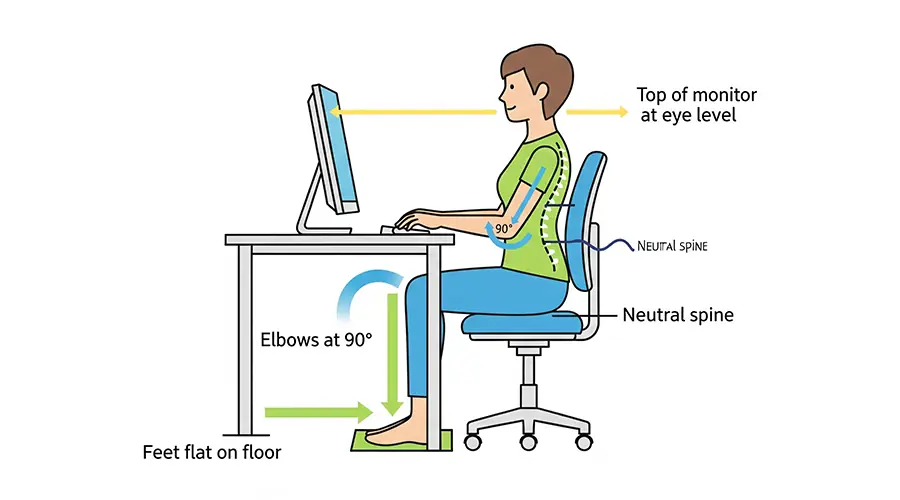
- Correct Your Posture: Keep your back straight when sitting, standing, and walking. Use ergonomic chairs at work.
- Ergonomics at Work and Home: Position your computer monitor at eye level, use a proper chair, and get up and walk around for a few minutes every hour.
- Manage Your Weight: Excess weight puts significant pressure on your spine. Maintain a healthy weight through a balanced diet and regular exercise.
- Proper Sleep: Sleep on a suitable mattress. If you sleep on your side, place a pillow between your knees to keep your spine aligned.
7. Safety Considerations and Expert Recommendations
Warnings: When to See a Doctor? In some cases, back pain can be a sign of a more serious problem. If you experience any of the following symptoms, seek immediate medical attention:
- Severe numbness, tingling, or weakness in your legs.
- Loss of bladder or bowel control.
- Severe and sudden pain that doesn’t improve with any movement.
- Pain accompanied by fever, unexplained weight loss, or trauma (e.g., after a car accident or fall).
Ready to address the root cause of your back pain? Our specialized physiotherapy programs in Dubai are tailored to your unique condition.
Frequently Asked Questions
How long does physiotherapy take to relieve back pain?
Many structured physiotherapy programs run as a focused 8-week course, with patients often noticing meaningful improvement within the first 4–6 weeks. Recovery time depends on the cause, severity, and how consistently the home exercise program is followed.
Is walking really enough to prevent back pain from coming back?
According to the WalkBack trial, a progressive, individualized walking program combined with brief physiotherapist coaching cut the risk of a disabling back pain recurrence by 28% and nearly doubled the median number of pain-free days. It’s one of the simplest, lowest-cost interventions with strong trial evidence behind it.
Why do I keep re-injuring my back even after the pain goes away?
One key reason is that the deep stabilizing muscles of the spine, particularly the multifidus, often don’t recover on their own even after pain resolves, leaving the spine less protected. This is why a physiotherapist-guided stabilization program, rather than generic core workouts or simply waiting for pain to pass, matters for long-term prevention.
What is Cognitive Functional Therapy, and is it the same as regular physiotherapy?
Cognitive Functional Therapy (CFT) is a specific, evidence-based form of physiotherapy that combines movement retraining with addressing unhelpful pain beliefs and fear of movement. In the RESTORE trial, just seven CFT sessions produced disability improvements that held steady for three years — making it a particularly well-evidenced option for chronic, persistent back pain.
Conclusion
Back pain is a manageable problem, and the strongest recent clinical evidence points to the same conclusion: combining targeted, physiotherapist-guided movement — whether that’s core stabilization, walking, or cognitive functional therapy — with an understanding of how pain actually works gives you the best chance at lasting relief. Remember that your body is strong, and movement, guided correctly, is its best medicine.