

Neck pain is a complex condition that can originate from various anatomical sources, including joint problems, nerve irritation, disc issues, and muscular dysfunction. When muscular trigger points contribute significantly to your symptoms, dry needling is one specific treatment technique a physical therapist may consider as part of a broader rehabilitation plan.
By understanding what this procedure involves, what current research supports, and where its clinical limitations lie, patients can make informed decisions about their pain management strategies. Dry needling is a relatively safe technique for spine and extremity injuries. This is a manual therapy technique used by licensed professionals to prevent any serious side effects.
What Is Dry Needling for Neck Pain?
What it is
Dry needling is a clinical intervention where physical therapists insert thin, solid, monofilament needles directly into targeted muscles and soft tissues in the neck and surrounding areas. For a broader overview of the procedure’s general uses, you can also review the Cleveland Clinic’s comprehensive guide to dry needling.
How it differs from medical injections
Unlike traditional medical injections, the procedure does not use any liquid medications such as cortisone, anesthetics, or muscle relaxants. The needle itself provides the stimulus; no medication is injected into the tissue.
Why physical therapists use it
Clinicians often use this method because it allows them to target specific tissue layers and muscular bands that can be challenging to address with superficial massage or manual therapy alone. It serves as an adjunct tool to help modulate pain and improve movement within a comprehensive physical therapy program. There are multiple trigger points on the middle and upper trapezius muscles associated with neck pain and referred pain. The dry needling would truly relieve the pain associated with trigger points.
What Causes Neck Pain and How Do Trigger Points Fit In?
Myofascial neck pain
Everyday factors like prolonged desk work, repetitive movements, poor sleeping ergonomics, and sustained postures place continuous mechanical load on the cervical spine and its supporting musculature. Over time, this may contribute to muscle fatigue, movement restrictions, and myofascial neck pain.
Trigger points
When a muscle is subjected to sustained stress or overload, it may develop myofascial trigger points, which are often felt clinically as highly sensitive, taut bands of tissue. One proposed explanation for trigger-point development involves sustained muscle activity, altered local blood flow, and changes in the biochemical environment of the muscle. For deeper insights into managing these knots, you can explore the Mayo Clinic’s clinical analysis of myofascial pain treatment.
Commonly affected muscles
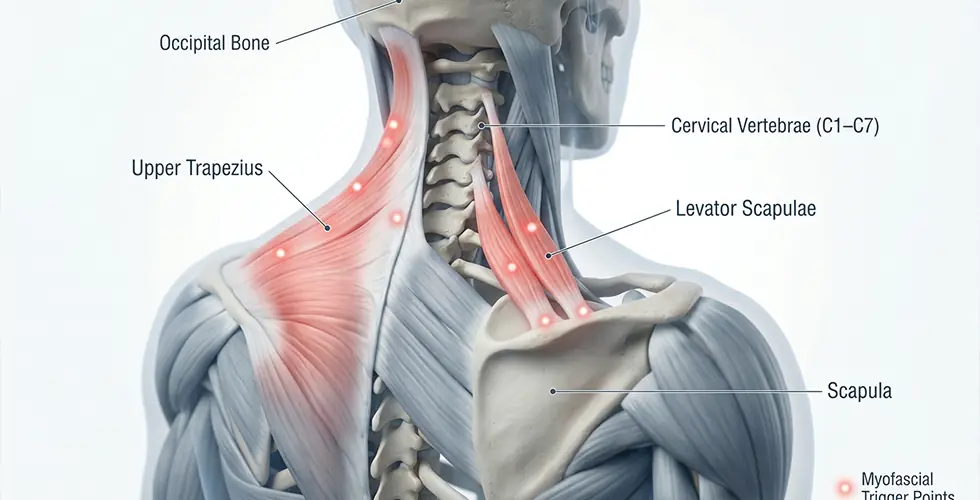
Muscular tension in the neck frequently involves several key anatomical areas:
- Upper Trapezius
- Levator Scapulae
- Sternocleidomastoid (SCM)
- Suboccipital muscles at the base of the skull
Referred pain
Trigger points can produce referred pain into nearby areas such as the shoulder, upper back, or head. However, pain, tingling, or numbness extending into the arm or fingers may have other causes, including nerve involvement, and should be carefully assessed by a professional.
Does Dry Needling Work for Neck Pain?
Current evidence and pain reduction
Systematic reviews, such as a clinical meta-analysis on dry needling for neck pain, suggest that dry needling can reduce pain intensity and improve disability in people with neck pain, with the most consistent benefits appearing in the short term. For patients, this often translates to a temporary reduction in daily discomfort and a better ability to perform normal tasks.
Function and range of motion
By addressing localized muscular tension, the treatment may also help improve cervical range of motion and decrease Neck Disability Index (NDI) scores, allowing patients to turn or tilt their heads with less restriction.
Short-term vs. long-term outcomes
Some studies have reported benefits at follow-up periods extending beyond the immediate treatment phase, but the durability of these effects varies. Evidence for long-term benefit remains less certain, which highlights why needling is rarely a standalone cure.
How Does Dry Needling Relieve Neck Pain?
Local twitch response
When a needle stimulates a trigger point, it may elicit a local twitch response (LTR). This is a brief, involuntary spinal reflex in the muscle fiber that can alter the tension within the taut band.
Mechanism of action
Dry needling may produce several local and neurophysiological responses. These may include changes in local blood flow, muscle activity, and sensitivity of pain-related nerve pathways. The exact mechanisms are still being studied, and no single mechanism fully explains how dry needling affects pain.
What Types of Neck Pain Can Dry Needling Help?
Myofascial neck pain and muscle tightness
The procedure is often considered for individuals experiencing mechanical neck pain, generalized muscle tightness, or localized symptoms specifically related to trigger points.
Cervicogenic headache
Cervicogenic headaches originate from structures in the neck, while muscle tension can contribute to headache symptoms in some patients. If you are concerned about triggering head pain, you can read our specific guide on Can Dry Needling Cause Migraines. Dry needling may be used when muscular dysfunction is identified as part of the clinical presentation.
When neck pain needs a different medical evaluation
Dry needling targets muscular and mechanical issues. If your neck pain is accompanied by symptoms such as fever, severe headache, significant weakness or numbness, loss of coordination, or pain following significant trauma, medical evaluation should be sought before dry needling.
Deep vs. Superficial Dry Needling for Neck Pain
Key differences
Superficial needling targets tissues closer to the surface, typically focusing on the overlying skin and superficial fascia. Deep needling reaches further into deeper muscular structures to directly interact with specific trigger points.
What research shows
Research indicates both approaches can be used to help reduce pain and improve function, depending on the patient’s presentation and the targeted area, as highlighted in a 2025 systematic review published in Medicina.
How clinicians choose between them
Your physical therapist will select the appropriate depth based on the targeted anatomy, your specific symptoms, clinical reasoning, safety considerations, and your tolerance of the procedure.
What Happens During a Dry Needling Session?
Assessment and muscles targeted
Before any needles are used, your clinician will evaluate your medical history, perform a movement screen, and assess your symptoms. Using palpation, they will identify areas of muscular tension to determine exactly which structures should be targeted.
Treatment process and what it feels like

Sterile, single-use needles are carefully inserted into the skin. As noted in the Mayo Clinic Health System’s explanation of expectations during dry needling, the initial insertion often feels like a slight tap or pinch. If the muscle responds with a local twitch, you may feel a brief, deep ache, a cramping sensation, or a temporary reproduction of your typical pain.
Session duration
The duration of the needling portion varies depending on the specific treatment plan and whether it is being combined with other rehabilitation techniques during the same appointment.
Reassessment
After the needles are safely removed, your therapist will typically reassess your cervical movement and symptom intensity to observe any immediate functional changes.
How Many Sessions of Dry Needling Do You Need?
There is no universally recommended number of sessions. Frequency depends on the cause, severity, duration of symptoms, response to treatment, and the broader rehabilitation plan. Your clinician will monitor your progress closely over the first few visits and adjust the approach based on how your body responds.
The typical dry needling sessions are associated with acute or chronic types of injuries. We assess each case and patient based on their pain tolerance sensitivities.
Dry Needling vs. Acupuncture for Neck Pain
Key differences
Although both techniques use thin needles, they are based on different clinical frameworks and are used with different treatment approaches. For a deeper breakdown of the philosophies and methodologies, explore our full comparison: Dry Needling vs. Acupuncture.
Point selection and philosophy
Acupuncture is generally rooted in Traditional Chinese Medicine principles, focusing on energy flow and meridian points that may be distal from the actual site of pain. Dry needling is primarily based on Western anatomical and neurophysiological principles, directly targeting specific muscular structures and localized tissue dysfunction identified during a physical exam.
Dry Needling for Neck Pain: Side Effects and Risks
Soreness and minor bruising
Muscle soreness after treatment is very common and often feels similar to post-workout fatigue. This soreness usually peaks within the first day and fades shortly after. Minor bruising or a small drop of blood at the needle site can also occur and is generally harmless.
Fatigue
Some people may experience temporary fatigue, lightheadedness, or other short-lived systemic symptoms following a treatment session.
Rare serious complications
Although pneumothorax (a collapsed lung caused by air entering the chest cavity) is rare, it is a recognized potential complication when needling is performed near the thorax or lower neck. Appropriate training, anatomical knowledge, and safe needling technique are important for minimizing this risk.
Is Dry Needling Safe for Everyone?
While generally safe for many people, it is not appropriate for every clinical situation. People taking anticoagulant or antiplatelet medication, those with bleeding disorders, and individuals with active infections or damaged skin at the treatment site may require additional precautions or alternative treatments.
Pregnancy does not automatically mean dry needling is unsuitable, but treatment should be discussed carefully with an appropriately qualified clinician before proceeding.
What to Do After Dry Needling
Managing post-treatment sensations
Stay normally hydrated and follow the specific aftercare advice provided by your clinician. Some people find gentle heat helpful for managing muscular soreness, while a cold pack may be used for minor bruising if recommended by the clinician.
Returning to daily activities
Gentle movement and normal daily activities are often encouraged to maintain mobility. However, your therapist may advise you to avoid highly strenuous physical activity or heavy lifting for the remainder of the day depending on your symptoms and your therapist’s recommendations.
When to contact your clinician
If you experience unexpected severe pain, shortness of breath, or prolonged swelling, contact a healthcare provider immediately.
Can Dry Needling Be Combined With Physical Therapy?
Dry needling is typically just one component of a comprehensive physical therapy plan. By helping to temporarily reduce acute pain and muscular tension, it can make other essential active treatments more tolerable.
Therapeutic exercise, manual therapy, and ergonomics
Once symptoms are more manageable, patients can more effectively engage in therapeutic strengthening exercises, joint mobilization, and ergonomic adjustments. This broader approach can address symptoms while also targeting contributing factors such as reduced strength, movement limitations, or sustained postures when these are relevant to the individual.
Dry Needling for Neck Pain in Dubai
Beyond Rehab provides individualized assessment and rehabilitation for patients dealing with neck and musculoskeletal pain in Dubai. Located in the Pinnacle Building on Sheikh Zayed Road, our clinic focuses on comprehensive, evidence-informed physical therapy.
Assessment and personalized treatment
Led by Dr. Shahrouz Parvinjah (Dr. Ruz), and Ms. Silvana Dehghan and our team offer thorough clinical evaluations to determine if dry needling is an appropriate, safe option for your specific presentation, always integrating it thoughtfully into a structured rehabilitation plan.
If you are dealing with persistent neck pain or muscular tension and want to explore your treatment options, contact the Beyond Rehab team today for a consultation or to book your assessment directly through WhatsApp.