

Knee pain is one of the most common musculoskeletal complaints, affecting millions of people worldwide. This condition is often caused by a combination of mechanical and degenerative factors that severely diminish an individual’s quality of life. When the pain becomes chronic, the search begins for an effective, safe, and sustainable solution. Chiropractic care, as a specialized discipline in managing the musculoskeletal and nervous systems, offers a comprehensive and non-invasive approach to knee pain relief, focusing on identifying and correcting the root causes of the problem rather than merely masking symptoms.
1. The Prevalence and Consequences of Knee Pain
Knee pain, especially resulting from Knee Osteoarthritis (KOA), is one of the leading causes of disability in adults, particularly those over 60 years old. It is estimated that up to 16% of the population struggles with the hallmark symptoms of this disease—pain, stiffness, and functional limitations. This condition not only reduces mobility but also decreases the overall quality of life and can lead to escalating healthcare costs, including expenses related to medications and joint replacement surgeries.
2. Limitations of Conventional Drug Treatments
For decades, the default response to treating knee osteoarthritis and pain often involved medications such as Non-Steroidal Anti-Inflammatory Drugs (NSAIDs) and acetaminophen. While these drugs can provide temporary relief, their long-term use is associated with serious side effects, leading public health experts to seek safer alternatives. Known risks include gastrointestinal bleeding, cardiovascular events, and even increased mortality in older patients with underlying comorbidities.
The need for a conservative, evidence-based approach that can reduce pain without imposing these serious side effects is crucial. Recent research strongly confirms that non-drug, conservative therapies can often equal or outperform medications in relieving knee osteoarthritis pain, doing so without dangerous side effects. Chiropractic care, with its emphasis on manual therapies, rehabilitation, and lifestyle modification, positions itself at the forefront of these safe and effective treatments, providing an alternative pathway for patients seeking more natural solutions.
Chapter One: Understanding the Holistic Chiropractic Approach to the Knee
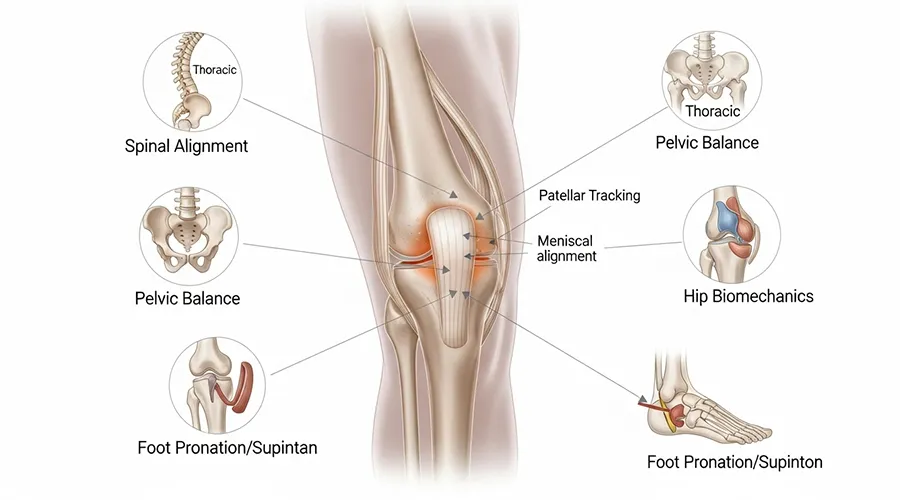
Chiropractic extends beyond merely focusing on the injured joint. Practitioners in this field believe that the knee, as an intermediate joint, is directly influenced by the mechanics and alignment of adjacent joints, particularly the spine, hips, and ankles. This holistic view is crucial for identifying and treating subtle factors that might be placing unnecessary stress or strain on the knee joint.
1. Beyond the Knee: The Spinal and Pelvic Connection
One of the key principles of chiropractic care is the understanding that misalignment or improper function in the spine and pelvis can directly affect weight distribution and movement in the lower limbs. Chiropractors use spinal adjustments to improve joint mobility and nervous system function. This approach can indirectly lead to positive outcomes for the knee; improving spinal alignment can enhance posture and gait (walking pattern), thereby reducing the mechanical stress exerted on the knee joints. For this reason, even for knee pain, a chiropractor performs a full assessment of the patient’s posture.
2. The Critical Mechanism of Referred Pain
One of the most important reasons why knee pain might be related to the spine is the phenomenon of “Referred Pain.” Referred pain is pain that is felt in one part of the body but originates elsewhere.
The Role of the Lower Back and Nerves: Several nerves that supply the lower limbs, including the knee, originate from the lumbar spine (lower back). If these nerves are damaged or compressed at their root, due to factors such as spinal arthritis, trauma, or disc herniation, pain signals may be mistakenly felt in the knee region. These neurological disturbances can manifest as pain, numbness, tingling (Pins and Needles), or even balance problems and reduced range of motion in the knee.
This scientific understanding highlights the chiropractor’s role as a musculoskeletal-nervous system expert. Given their ability to evaluate and treat the spine, they can identify the neurological source of knee pain that might be overlooked by other specialists who focus solely on the knee joint itself. This ability to diagnose a distant cause of pain increases the level of expertise and the value of a referral to chiropractic care.
3. Focus on Tissues Surrounding the Knee
The chiropractic approach extends beyond joint adjustments to include a specialized focus on the soft tissues around the knee. This comprehensive approach allows practitioners to treat a wide range of knee injuries and problems.
Chiropractors have invaluable insight into the knee joint and its surrounding tissues and can identify the cause of pain to put a lasting end to it, naturally. Injuries commonly treated by chiropractors include:
- Arthritis (chronic pain)
- Jumper’s knee and Runner’s knee
- Knee bursitis
- Sprains and strains
- Iliotibial band syndrome (IT band syndrome)
- Various inflammations.
By targeting the roots of the pain, whether it stems from misalignment, muscle imbalance, or joint issues, chiropractic care provides effective pain relief through adjustments and soft tissue techniques.
C. Chapter Two: Chiropractic Treatment Tools for the Knee

Modern chiropractors utilize a suite of evidence-based treatment methods that include not only manual adjustments but also soft tissue therapy and active rehabilitation. This multi-faceted combination makes the treatment approach powerful and comprehensive, enabling practitioners to act as advanced musculoskeletal care providers.
1. Knee Joint Adjustments and Mobilization
The primary goal of chiropractic adjustments is to restore normal joint function and reduce stiffness.
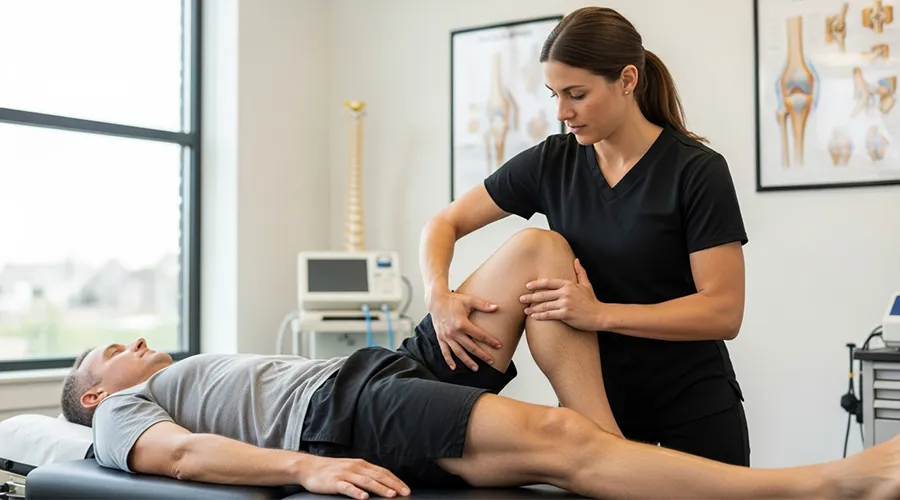
Restoring Joint Mechanics: Chiropractors use gentle adjustments to realign the knee joint. Improving alignment can reduce stress on the joint and promote proper biomechanics. Specialized techniques include gentle oscillatory mobilization and axial distraction. These measures restore joint mechanics, improve synovial fluid distribution, and reduce nociceptive input (pain signals). These efforts help patients experience greater flexibility and range of motion.
2. Soft Tissue Therapy and Nerve Release (Neurodynamics)
Muscular problems and soft tissue imbalances can often exacerbate knee pain. Therefore, chiropractic care incorporates soft tissue therapy into its program to address these issues.
Release Techniques: Soft tissue therapies include Myofascial Release, which helps release tight fascia and improve flexibility, and Trigger Point Therapy, which targets specific muscle knots contributing to pain. Massage therapy can also enhance blood flow, reduce inflammation, and promote relaxation.
Nerve Mobilization: A growing body of evidence focuses on neurodynamic techniques, such as “nerve flossing” and nerve release. By mobilizing the nerves that transmit painful input from the knee joint, these techniques can help reduce pain and improve function in knee osteoarthritis. Key targets include the saphenous/femoral, tibial, obturator, and common peroneal nerves, which collectively supply the anterior, medial, posterior, and lateral knee capsule. These methods demonstrate an advanced, evidence-based approach in modern chiropractic care that goes beyond purely bone adjustments to include neural tissues.
3. Rehabilitation Exercises and Targeted Strengthening
A comprehensive chiropractic care plan always includes the prescription of exercise and physical rehabilitation. Weak or imbalanced muscles around the knee can contribute to instability and pain.
Personalized Programs: Chiropractors often prescribe personalized exercise programs that include strengthening key muscles such as the quadriceps, hamstrings, and calf muscles to provide better support for the knee. Stretching exercises are also recommended to enhance flexibility and prevent stiffness. The chiropractor’s role here extends beyond manual therapy to include that of a rehabilitation coach, helping the patient regain long-term strength and function. This focus on active strengthening ensures that the mechanical root causes of the problem are fully addressed.
Chapter Three: Evidence of Efficacy and Expectation Management
For the general public, it is vital to understand that chiropractic care is a valid, evidence-based treatment option. Furthermore, managing expectations regarding the limitations of treatment helps maintain trustworthiness in the healthcare field.
1. Clinical Outcomes in Pain Relief and Function
Clinical findings attest to the effectiveness of chiropractic care in reducing pain and improving function.
Pain Reduction and Improved Quality of Life: Research indicates that chiropractic adjustments can lead to significant pain reduction in patients with knee problems. In clinical studies, approximately 70% to 80% of patients report feeling significant relief after undergoing a series of chiropractic treatments. This relief can dramatically enhance daily activities and improve overall quality of life.
Improved Mobility and Flexibility: Through targeted adjustments, chiropractors can restore proper alignment and function of the knee joint, which in turn promotes greater range of motion. Some patients in studies have reported a 60% increase in mobility after participating in chiropractic sessions. This improved mobility allows individuals to participate in physical activities more comfortably.
Preventive and Long-Term Role: The preventive approach of chiropractic care, by ensuring optimal knee function, reduces the risk of chronic issues. Studies show that patients who maintain regular chiropractic care for knee pain have a significantly lower chance of experiencing future knee problems (approximately 70% to 75% reduction) compared to those who do not.
2. Efficacy in Knee Osteoarthritis (KOA) and Realism
Knee Osteoarthritis is one of the most common causes of knee pain, and chiropractic care often plays a role in managing its symptoms. Research confirms that conservative interventions such as Manual Therapy (MT) and specialized exercises (SE) are safe and effective alternatives for reducing KOA pain, especially in the short term.
However, a responsible approach to healthcare necessitates careful management of patient expectations. Leading specialists and researchers emphasize that there is no clear evidence that chiropractic care or any other treatment can permanently reverse the radiographic changes (X-ray findings) caused by arthritis or “cure” it. In truth, chiropractic care for arthritis is a manager of pain and function rather than a definitive cure. If a clinician claims their treatment will permanently cure your arthritis, caution is advised. This level of scientific transparency enhances the author’s and content’s credibility and trustworthiness in the reader’s eyes.
3. Guide to Treatment Assessment and Timeline
A key recommendation for patients is to evaluate whether the ongoing treatment is effective. This not only saves time and money but also helps the patient pursue another course of treatment if necessary.
For most knee problems, if the patient does not observe significant symptom improvement after 4 to 10 treatment sessions, it is recommended to either switch chiropractors or seek an entirely new treatment path. This defined criterion demonstrates a commitment to clinical outcomes and prevents the waste of patient resources on ineffective treatments.
Chapter Four: Comparison and Practical Planning
Chiropractic care is often considered alongside or in comparison to other conservative therapies like Physical Therapy (PT). Understanding the distinctions and overlaps between these two approaches is essential for patients making treatment decisions.
1. Chiropractic vs. Physical Therapy
Difference in Primary Focus: Physical therapists focus more on exercise-based treatments, targeted muscle strengthening, and mobility restoration. In contrast, chiropractors primarily focus on alignment through spinal and peripheral joint adjustments to improve nervous system function.
Shared Ground and Combining Evidence: Both are licensed, educated professionals who offer non-invasive and holistic treatments. Both may also include manual therapies, educational advice, and adjunctive physical methods.
Evidence Status: In comparing the evidence, it is necessary to acknowledge that the research support for the role of physical therapy, particularly for the knee and back, is traditionally stronger. In a comprehensive systematic review, aerobic exercise therapy consistently showed the highest probability of being the best treatment for knee osteoarthritis. However, meta-analyses show that both Manual Therapy (MT) and Supervised Exercise (SE) are effective interventions for reducing pain in the short term.
To achieve the best outcome, the approach should reflect the strongest evidence. Since exercise therapy has the highest evidence of effectiveness , modern chiropractors have adapted their approach and integrate a strong rehabilitation component (prescribing strengthening exercises) into their treatment plan. This integration ensures that the patient not only benefits from mechanical adjustments but also experiences stable recovery through improved muscle strength and stability. Ultimately, the best choice depends on the patient’s individual needs, and often a combined approach can offer the greatest benefit.
2. Planning a Course of Treatment
When an individual decides to start chiropractic care, the question arises as to how long the process will take and what the cost will be.
Treatment Duration: The number of sessions required for knee pain varies depending on the severity of the condition, its chronicity, and how the patient’s body responds to treatment. In most cases, a series of 4 to 12 treatments is recommended to achieve significant relief and functional improvement.
Frequency and Treatment Phases: For new or acute conditions, a typical treatment schedule usually involves 2 visits per week for the first 2 to 4 weeks. After this initial phase, which aims to reduce acute pain and inflammation, the frequency of visits decreases (e.g., to once per week or once every few weeks), until symptoms significantly improve. After recovery, periodic preventative visits may be recommended to maintain results and prevent recurrence.
Costs: The cost of an initial chiropractic consultation usually includes a detailed physical examination and, in some cases, diagnostic tests such as X-rays. This cost typically ranges between $50 and $150, depending on the clinic and geographical area. Planning an initial course of care by determining the root cause of the problem can reduce overall treatment costs in the long run.
Ultimately, this treatment approach includes acute relief phases to reduce severe pain, corrective and rehabilitation phases to restore function and strength, and finally, maintenance and prevention phases to sustain results, each with its own specific frequency and goals.
Chapter Five: Safety and Risk Management
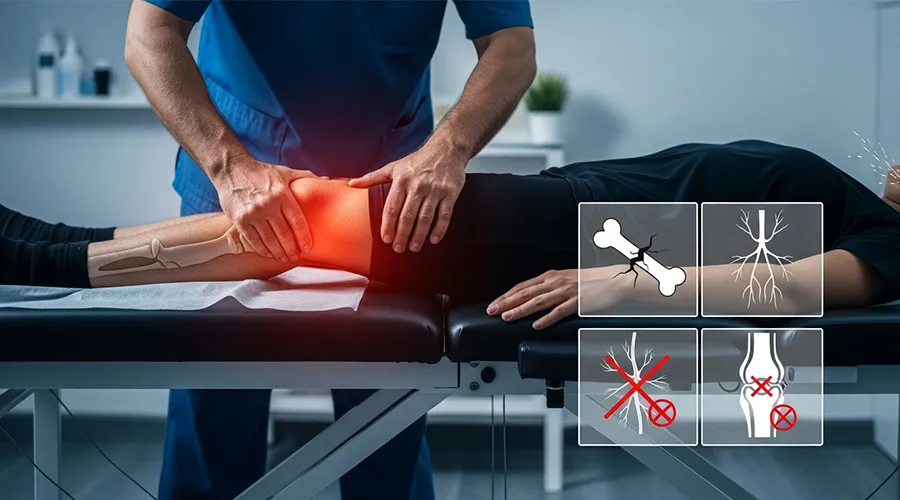
When patients seek manual therapies, concerns related to safety and potential risks are a key issue. An expert report must provide full transparency regarding safety and differentiate between standard chiropractic treatment methods and more invasive procedures.
1. General Safety of Chiropractic Care
Chiropractic adjustments, when performed by licensed and trained professionals, are generally considered safe. Serious complications linked to chiropractic adjustments are rare.
Temporary Side Effects: Following an adjustment session, an individual may feel tired or sore. Some people might experience mild headaches. These side effects are usually temporary and quickly resolve.
Rare Complications: Serious complications, although extremely rare, are more often associated with spinal adjustments (especially the neck) and include issues such as disk herniation or stroke (following neck adjustments). It should be noted that direct knee joint adjustments carry a significantly lower risk compared to spinal adjustments.
2. Critical Distinction: Manipulation Under Anesthesia (MUA)
To maintain transparency and risk management, it is important for the general public to know that a procedure called “Manipulation Under Anesthesia” (MUA) is different from standard chiropractic adjustments and carries different risks.
Definition of MUA: MUA is a non-invasive procedure performed by orthopedic surgeons or rehabilitation specialists to restore range of motion in the knee, especially in cases where the joint has become very stiff and painful. This often occurs after Total Knee Replacement surgeries, where scar-like tissue (adhesions) has formed in the joint capsule, restricting movement. During MUA, surgeons “manipulate” or move the knee joint through flexion and extension while the patient is under anesthesia to loosen it.
Risks of MUA: Although MUA leads to increased knee mobility and reduced pain in most patients , it carries significant risks. The most common complication is the return of stiffness. Other risks that must be considered include:
- Fracture: This complication is very rare but does exist with MUA.
- Implant Damage: If MUA is performed after knee replacement, there is a risk of damage to the artificial implant or fracture.
- Nerve/Vascular Injury and Chronic Pain: There is a slight risk of nerve or vascular injury, and it is also possible that the patient may still experience stiffness or chronic pain despite the manipulation.
It is essential to note that MUA is a specialized surgical procedure, while standard chiropractic care is completely non-invasive and performed without anesthesia.
3. Contraindications and Consulting a Physician
In some conditions, chiropractic care may not be suitable, and an individual should consult with a medical specialist before beginning treatment. These instances include :
- Severe Osteoporosis.
- The presence of cancer in the spine.
- Numbness, tingling, or severe loss of strength in an arm or leg, indicating serious nerve compression.
- Increased risk of stroke.
Understanding these contraindications is part of providing a responsible and safe approach to healthcare.
By highlighting the risks and long recovery times associated with invasive surgeries like knee replacement (which can take up to a year and still impose limitations on high-impact activities) , the primary advantage of chiropractic care—being non-invasive and drug-free—is implicitly reinforced. Patients looking to avoid surgery and its complications are naturally drawn to this conservative option.
G. Chapter Six: Conclusion and Call to Action
Chiropractic care, relying on a holistic and evidence-based approach, is a strong treatment option for individuals suffering from knee pain. This approach is particularly appealing to those seeking non-drug and non-surgical solutions.
1. Summary of Key Benefits
By focusing on the entire musculoskeletal system, chiropractors address not only the knee joint but also the biomechanical and neurological factors that influence it, such as spinal misalignment and muscle imbalances. The main benefits of this approach are:
- Non-Invasive Treatment: Avoiding surgery and reducing reliance on pain medications that carry potential side effects.
- Holistic Approach: Addressing the root causes of pain, not just the symptoms.
- Improved Function and Mobility: Increasing the knee’s flexibility and range of motion.
- Sustainable Pain Relief: Providing natural pain relief through specialized adjustments and therapies.
2. Success Stories: Returning to an Active Life
The impact of chiropractic care extends beyond statistics and is reflected in real patient experiences. Many individuals have been able to return to activities that knee pain had prevented them from enjoying. For example, patients have reported being able to run pain-free or return to playing basketball with friends after just a few sessions, avoiding surgery altogether. Others, despite a diagnosis of severe arthritis that made walking next to stairs difficult, experienced significant improvement in their knee pain. These reports, which include improved muscle strength, reduced leg numbness, and increased stamina for lengthy yard work, demonstrate the ability of chiropractic care to restore quality of life.
3. The Final Step: Consultation and Commitment to Rehabilitation
If an individual is facing chronic or acute knee pain, consulting a reputable chiropractor can be a vital first step towards recovery. A chiropractor can assess whether the knee pain is local in origin or referred pain from the spine or hip.
Ultimately, the long-term success of this treatment heavily depends on the patient’s commitment to the rehabilitation component. Even after manual therapy restores range of motion, it is essential that the patient consistently performs the exercises prescribed by the chiropractor or physical therapist to prevent the re-formation of scar tissue and stiffness, thereby maintaining treatment results. By embracing a personalized treatment plan that combines joint adjustment, soft tissue therapy, and strengthening exercises, patients can hope to regain their function and naturally reduce their knee pain.