
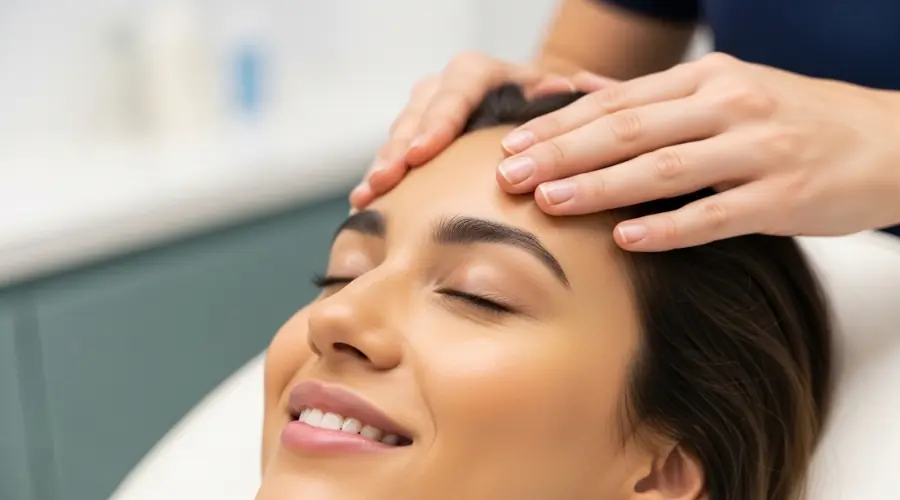
In the modern world, we often carry the weight of our daily lives exactly where it shouldn’t be: in our heads and necks. Between the constant “tech-neck” from staring at screens and the mental fog of a never-ending to-do list, our cranial health is frequently neglected. However, a head massage is far more than a simple luxury or a brief moment of pampering at the salon. It is a scientifically-backed therapeutic modality with profound biological, neurological, and physiological benefits.
Whether you are seeking relief from chronic tension, looking to improve the health of your hair, or simply needing to “reset” your nervous system, understanding the science behind head massage reveals why it is an essential part of a modern wellness routine.
The Ancient Origins of Cranial Therapy
While modern science is only recently catching up, the practice of stimulating the scalp and head dates back over 4,000 years. It finds its strongest roots in two major traditional medical systems:
- Ayurvedic Medicine (India)
In India, the practice is known as Shiroabhyanga (derived from Shiro, meaning head, and Abhyanga, meaning oil massage). In the Ayurvedic tradition, the head is considered the seat of the nervous system and contains vital energy points known as marma. These points act as gateways for systemic regulation. Traditional texts, such as the Charaka Samhita, advocate for regular head massage to balance the body’s “doshas” (elemental forces) and maintain cognitive clarity. - Traditional Chinese Medicine (TCM)
TCM offers a complementary perspective, viewing the scalp as a dense network of meridian pathways. The gallbladder meridian, in particular, has a high concentration of pressure points across the head. Historically, the manipulation of these points was intended to facilitate the flow of Qi (vital energy) and improve cerebral circulation.
The Science of Hair Health: Mechanotransduction
One of the most frequent questions regarding head massage is: “Can it really help my hair grow?” The answer lies in the field of mechanobiology.
The 2016 Landmark Study
A 2016 study published in Eplasty evaluated the effects of standardized scalp massage on healthy Japanese men over a 24-week period. The researchers discovered that physical manipulation of the scalp triggers a process called mechanotransduction. This is where mechanical forces are converted into biochemical signals within the cells. Specifically, the stretching forces of a massage change the gene expression of the human dermal papilla cells. These cells are vital for the hair growth cycle and follicle regeneration.
| Gene | Response to Massage | Physiological Implication |
|---|---|---|
| NOGGIN | Increased Expression | Promotes follicle development and initiation. |
| BMP4 | Increased Expression | Regulates specialized cellular differentiation. |
| SMAD4 | Increased Expression | Essential for hair follicle stem cell signaling. |
| IL6 | Decreased Expression | Reduces inflammation linked to premature hair loss. |
Realistic Expectations
It is important to note that while massage increases hair thickness by addressing thinning and miniaturization, it is not a “miracle cure” for complete baldness where follicles have already atrophied. However, for those looking to improve density and health, consistency is key. Research shows that cumulative intervention over several months yields significantly better results than occasional treatment.
Physical Benefits: Headache and Migraine Relief
For many, the primary motivator for seeking a professional head massage is the management of pain, specifically Tension-Type Headaches (TTH).
Addressing Myofascial Trigger Points
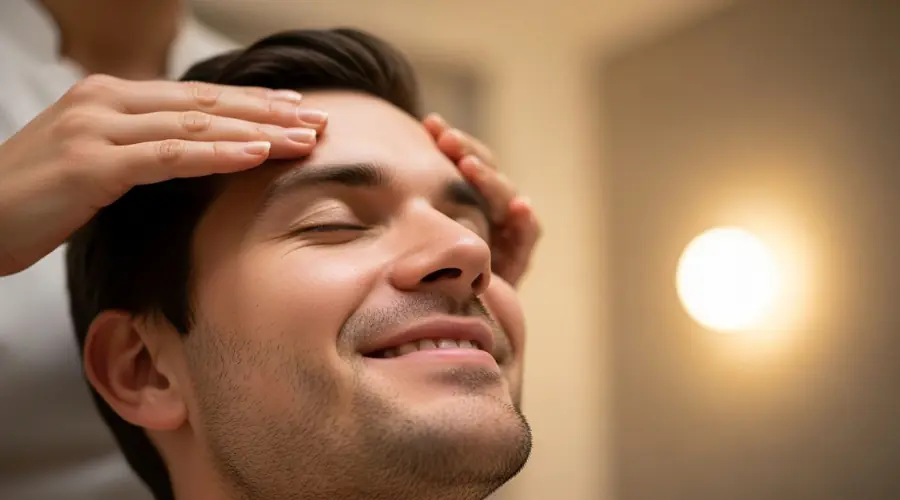
Chronic tension headaches are often caused by myofascial trigger points—hyperirritable “knots” in the muscles of the head, neck, and shoulders. These knots can refer pain to distant areas, such as behind the eyes or at the temples. In a 2015 randomized controlled trial, subjects suffering from chronic tension headaches received targeted massage therapy on the upper trapezius, suboccipital, and temporalis muscles. The results were striking:
- Frequency Reduction: Headache frequency dropped from an average of 6.8 per week to just 2.0 per week.
- Lower Sensitivity: Subjects reported a higher “pressure-pain threshold,” meaning their muscles were less reactive to daily stressors.
While massage is most effective as a preventative management tool rather than an acute analgesic for a severe migraine in progress, regular sessions can significantly decrease the intensity and frequency of future attacks.
Neurological and Endocrine Response
Beyond the physical muscles, head massage serves as a powerful modulator of the Autonomic Nervous System. It acts as a switch, transitioning the body from a “fight-or-flight” (sympathetic) state to a “rest-and-digest” (parasympathetic) state.
1. Lowering Blood Pressure
Clinical trials involving female office workers demonstrated that twice-weekly sessions resulted in significant reductions in both systolic and diastolic blood pressure. This is attributed to the promotion of vasodilation—the widening of blood vessels—which reduces the overall workload on the cardiovascular system.
2. The “Feel-Good” Chemistry
Tactile stimulation of the scalp triggers the release of several critical neurotransmitters:
- Serotonin & Dopamine: These “happy chemicals” regulate mood, sleep, and motivation.
- Oxytocin: Known as the “cuddle hormone,” it promotes feelings of security and social bonding.
- Endorphins: The body’s natural painkillers that induce a sense of mild euphoria.
Simultaneously, massage leads to a marked decrease in Cortisol and Norepinephrine, the hormones responsible for long-term stress damage, cognitive fog, and impaired immunity.
The Sensory Dimension: ASMR
Many people describe a “tingling” sensation during a head massage that starts at the scalp and moves down the spine. This is known as Autonomous Sensory Meridian Response (ASMR), or colloquially, a “head orgasm.” Scientific investigation using fMRI has shown that ASMR activates brain regions associated with social grooming. For the modern human, this provides an immediate emotional “pick-me-up” and acts as a powerful sleep aid, making it a highly effective treatment for those suffering from high-functioning anxiety or insomnia.
Enhancing the Experience: Professional Aromatherapy
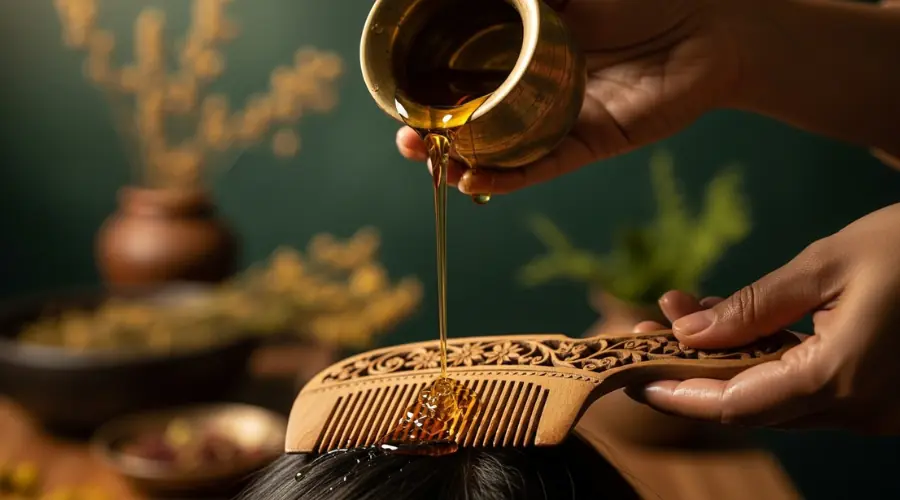
In a clinical setting, we often integrate essential oils to amplify the benefits of the massage. This isn’t just for the scent; the chemistry of these oils has measurable effects.
Rosemary Oil: A Natural Alternative
A significant comparative trial found that Rosemary oil was as effective as 2% Minoxidil (a standard pharmaceutical hair-growth treatment) for certain types of hair loss over a six-month period. Crucially, the rosemary oil group reported less scalp itching and irritation.
Safety and Dilution
Because essential oils are highly concentrated, they must be handled with professional care. We utilize precise dilution protocols in carrier oils like Jojoba or Coconut to ensure safety:
- Peppermint: For a cooling sensation and improved circulation.
- Lavender: For deep relaxation and calming the nervous system.
- Rosemary: For targeting hair thickness and follicle health.
Safety Precautions and Clinical Contraindications
As a health-related intervention, there are specific instances where head massage should be approached with caution or avoided:
- Local Conditions: Open cuts, sores, undiagnosed lumps, or severe sunburn on the scalp.
- Shedding Phase: It is normal to see a temporary increase in hair shedding during the first few weeks of starting a routine. This is the mechanical release of hairs already in the “resting” phase, usually making way for stronger growth.
- Specialized Health Needs: Patients with cancer should seek oncologist clearance. For those with Epilepsy, certain essential oils (like Rosemary or Fennel) are strictly contraindicated as they can act as seizure triggers.
Why Professional Therapy Outperforms DIY
While a quick rub at home can feel nice, a clinical session offers depth that is difficult to achieve on your own. Professional modalities like Cranial-Sacral Therapy or Myofascial Release use specific, light-touch techniques to improve the flow of cerebrospinal fluid and address deep-seated tension in the fascia—the connective tissue surrounding your muscles. Professional therapists can identify precisely where your “trigger points” are hidden and apply sustained, moderate pressure that would be ergonomically difficult to do yourself.
Conclusion: Invest in Your Well-being
The scientific evidence is overwhelming: head and scalp massage is a low-risk, high-reward tool for enhancing your quality of life. By stabilizing your heart health, modulating your hormones, and even influencing the genetic expression of your hair follicles, this ancient practice addresses the most common challenges of our modern era.
Don’t just carry the stress—release it.
Ready to experience the science of relaxation? Our clinical specialists are trained in advanced cranial techniques designed to provide lasting relief from headaches, boost hair health, and quiet the mind.